

To foster happiness in the workplace, management theories emphasize the importance of creating a positive environment that addresses employees needs for autonomy, relatedness, and competence. This includes providing opportunities for growth, recognizing achievements, encouraging open communication, and promoting a healthy work-life balance
Social psychologist Douglas McGregor put forward his Theory X and Theory Y in his 1960 book, The Human Side of Enterprise. These theories explained two contrasting management styles, based on what managers believe motivates their employees.
What does Theory X and Theory Y mean?
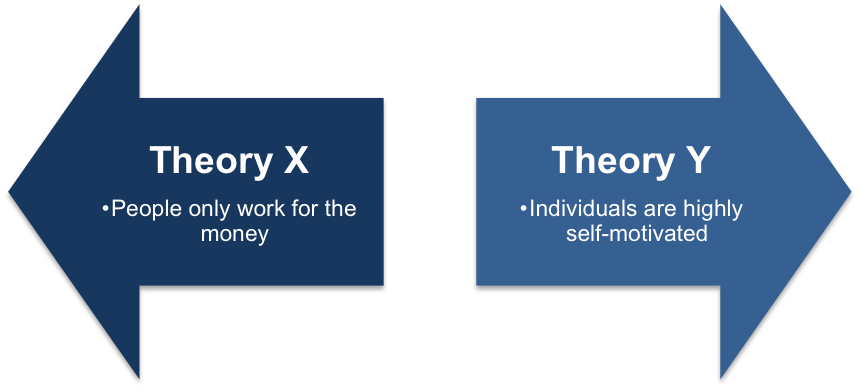
Theory X and Theory Y are management theories developed by Douglas McGregor. Theory X is based on the assumptions that employees don’t really want to work, lack ambition, only work to collect a paycheck, and need constant supervision. Theory Y is based on the assumptions that employees want to work, want to take responsibility, and do not need much supervision.
What is the difference between Theory X and Theory Y ?
The differences between Theory X and Theory Y are the assumptions made about workers, supervisor and employee involvement, and organizational structure. Theory X requires more supervision whereas Theory Y’s management involvement is more lax.
What do Theory X managers assume about their workers?
They:
- Don’t like the work
- Shirk responsibility
- Need to be told what to do and have constant supervision
- Have no ambition or desire to work hard
- Are only motivated by rewards
What do Theory Y managers assume about their workers?
They:
- Find their work satisfying and challenging
- Want to help make good decisions
- Motivate themselves
- Take responsibility for their work
- Need very little direction
- Can think outside the box to solve problems